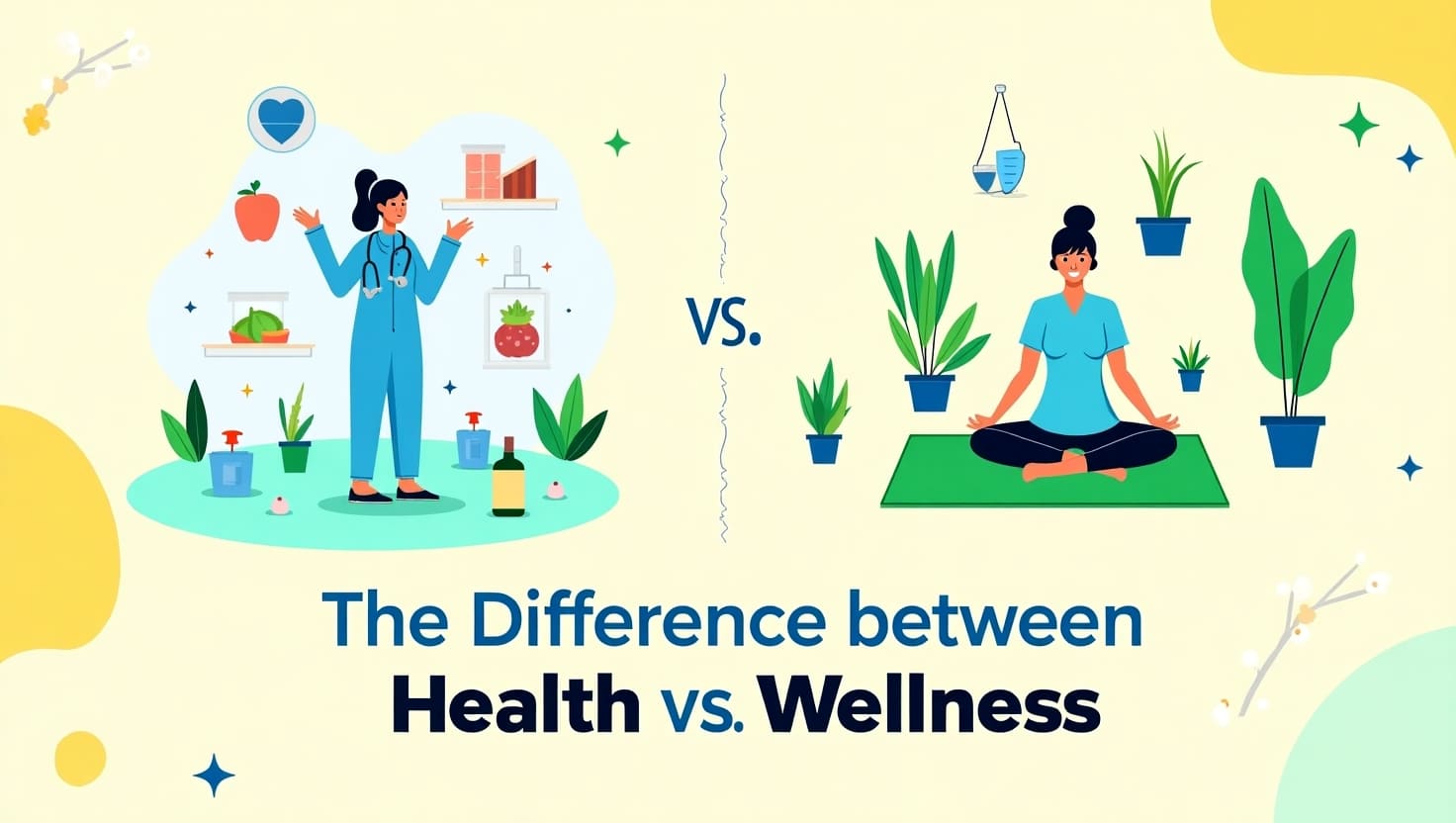
In today’s fast-paced world, we often hear the terms “health” and “wellness” used interchangeably. But are they really the same thing? While they are closely related, health and wellness have distinct meanings that influence how we live, think, and care for ourselves.
Understanding the difference between health and wellness is key to creating a balanced and fulfilling life. In this article, we’ll break down what each term truly means, how they differ, and how you can improve both.
What is Health?
Health is typically defined as the state of being free from illness or injury. According to the World Health Organization (WHO), health is “a state of complete physical, mental, and social well-being and not merely the absence of disease or infirmity.”
Key Aspects of Health:
- Physical Health: Body function, fitness, and ability to perform daily tasks.
- Mental Health: Emotional stability, cognitive function, and stress management.
- Social Health: Relationships, community involvement, and interpersonal support.
👉 In short, health is a state, something that can be diagnosed, measured, and treated.
What is Wellness?
On the other hand, wellness is the active pursuit of activities, choices, and lifestyles that lead to a state of holistic health.
Wellness is not a static state—it’s dynamic and ongoing. It focuses more on preventive care, self-awareness, and personal growth.
Dimensions of Wellness:
- Physical Wellness – Exercise, nutrition, sleep habits.
- Emotional Wellness – Self-care, managing emotions, resilience.
- Spiritual Wellness – Purpose, inner peace, values.
- Intellectual Wellness – Continuous learning and curiosity.
- Social Wellness – Building healthy relationships.
- Occupational Wellness – Work-life balance and career satisfaction.
- Environmental Wellness – Living in harmony with nature and surroundings.
👉 In simple terms, wellness is a lifestyle, a proactive process of becoming aware and making choices that lead to a healthier, more fulfilling life.
Health vs. Wellness: Key Differences
| Aspect | Health | Wellness |
|---|---|---|
| Definition | State of being free from illness | Ongoing pursuit of balanced living |
| Focus | Treatment and prevention of illness | Holistic self-care and lifestyle improvement |
| Measurement | Can be diagnosed (e.g., via medical tests) | Self-assessed through habits and feelings |
| Time Frame | Often short-term (fixing illness) | Long-term (lifestyle sustainability) |
| Approach | Reactive (treat illness) | Proactive (prevent problems before they start) |
Why Understanding the Difference Matters
Recognizing the difference between health and wellness empowers you to take full control over your well-being. Even if you’re not sick, you may still lack wellness if you’re stressed, fatigued, or disconnected.
For example:
- You may have good physical health but poor emotional wellness due to chronic stress.
- You may feel mentally balanced but suffer from low physical health because of poor diet or lack of exercise.
Both health and wellness are essential for a happy, energetic, and purpose-driven life.
Tips to Improve Both Health and Wellness
- Eat Balanced Meals
Fuel your body with nutrients that support physical health and boost mental clarity. - Move Your Body Regularly
Physical activity reduces disease risk and enhances emotional wellness. - Practice Mindfulness & Stress Management
Yoga, meditation, journaling, or breathing exercises can greatly improve wellness. - Get Quality Sleep
Sleep is critical for both health and wellness. Aim for 7-9 hours nightly. - Build Positive Relationships
Social support contributes to longevity, happiness, and emotional well-being. - Set Personal Goals
Wellness thrives when you pursue meaningful activities and personal growth.
Conclusion
While health and wellness are closely intertwined, they are not the same. Health is a state of being, while wellness is a way of living. By understanding the difference and working on both, you can live a more balanced, vibrant, and fulfilling life.
Make wellness a daily practice—not just something you consider when you’re unwell. And remember, you don’t have to be perfect. Small, intentional steps lead to long-term transformation.